
CHAPTER 1
Der Albtraum beginnt.
The December wind howled against the stone walls of St. Brigid Orphanage, rattling the frosted windows and carrying with it the promise of snow. It was the bleak midwinter of 1929, and the Great Depression had already begun to tighten its grip on the world. Sister Agnes had been making her rounds through the dimly lit corridors, her rosary beads clicking softly against her hip, when she heard it: a thin, reedy cry cutting through the howling gale. At first, she thought it was merely the wind playing tricks on her aging ears, but the sound persisted, growing more insistent with each passing moment. She followed it to the heavy oak doors at the entrance, and when she pulled them open, she found a small wicker basket sitting on the frozen stone steps. Inside, wrapped in a threadbare blanket that offered little protection against the elements, lay an infant no more than a few hours old, her tiny face flushed crimson from the cold, her cries already growing weak and pitiful. The nuns rushed her inside, warming her by the great fireplace in the common room, and it was there that Mother Superior discovered the note tucked beneath the baby's blanket, written in a trembling hand on a scrap of brown paper: "Please take care of my daughter. I cannot provide for her in these desperate times. She was born this morning. May God forgive me."Mother Superior held the infant close to her chest, feeling the tiny heartbeat against her own, and something in her stern, weathered face softened. She had seen so many children pass through these doors, children born of tragedy and hardship, children abandoned by parents who could no longer bear the weight of their survival. But this one, this little girl who had arrived on the cusp of winter with nothing but a basket and a thin blanket, seemed somehow different. The other nuns gathered around, their habits whispering against the floor, and they asked what she would name the child. Mother Superior looked down at the baby's face, still red and blotchy from the cold, and thought of the day ahead. It was December 13th, a day that would mark the beginning of this child's new life. She thought of hope, of love, of the delicate and miraculous process of transformation. "LOVEDAY MERIAN BUTTERFLY," she announced, her voice carrying the weight of her conviction. "This is the day she will be loved, and she will grow into a beautiful butterfly, emerging from this place into a world that will one day recognize her brilliance." The other nuns exchanged glances, some bemused, others touched, but none dared question the Mother Superior's decision. And so, on that cold winter night, Loveday Merian Butterfly received her name, her home, and the first of many blessings that would shape the strange and extraordinary course of her life.

CHAPTER 2
Bezmolvny rebyonok.
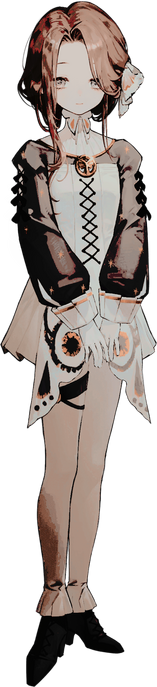
As the years passed, the nuns of St. Brigid Orphanage began to notice something peculiar about their little butterfly. While other children crawled, babbled, and eventually began forming words with the clumsy enthusiasm of youth, Loveday remained frustratingly quiet. Her growth was slow, almost achingly so, and she seemed to exist in a world of her own making, observing the chaos of childhood with wide, watchful eyes that missed nothing. The other children would run shrieking through the hallways, their laughter echoing off the stone walls, but Loveday would simply sit in her corner of the playroom with her small hands occupied with whatever found object had captured her attention that day. The nuns worried, and some whispered that perhaps the cold had damaged something in the child, that perhaps she would never speak, that she was destined for a life of silence and isolation. Father Brennan was called in to examine her, his stern face peering down at her through wire-rimmed glasses, and he concluded that she was likely mute, though he found it puzzling that she had cried so vigorously as an infant if she truly had no capacity for speech. Mother Superior, however, refused to accept this diagnosis. She had seen
the way Loveday's eyes followed conversations, the way her lips sometimes moved as if practicing words that would not come, the way she would point emphatically at things she wanted but could not name.It wasn't until Loveday was nearly five years old that the truth finally revealed itself, and it did so in the most unexpected manner. Mother Superior had been reading aloud to the children from a worn copy of The Secret Garden, her voice carrying through the hushed room as the children sat cross-legged on the floor, enraptured by the tale of Mary Lennox and her miraculous garden. Loveday sat at the back of the group, her hands folded neatly in her lap, her tan brown hair falling across her face like a curtain. When Mother Superior reached the part where Mary discovers the key to the garden, Loveday suddenly spoke, her voice soft and slow, each word carefully measured like a butterfly alighting on a flower. "The key," she said, drawing out each syllable with painstaking precision, "it was buried. In the earth. She had to dig." The room fell silent, and all eyes turned to the child who had never spoken a word. Mother Superior felt tears spring to her eyes, and she set the book aside, kneeling beside Loveday and taking her small hands in her own. "Yes, my darling," she said, her voice thick with emotion. "Yes, she had to dig for it." From that day forward, Loveday spoke more often, though always with that same slow, deliberate cadence, as if she were translating her thoughts from some other language, some other world that only she could see. The nuns learned to be patient, to wait for her words, to listen with the kind of attention that most people reserve for something precious and rare. They realized that Loveday was not silent because she had nothing to say, but rather because she had so much to say that she needed time to arrange her thoughts into perfect formation before releasing them into the world.

CHAPTER 3
Sortir de son cocon.
As Loveday grew, her peculiarities became more pronounced, though they were no less endearing to those who took the time to understand her. She was clever, remarkably so, and her eagerness to learn became a source of pride for Mother Superior, who had always seen something special in the foundling child. While the other children dragged their feet on the way to lessons, Loveday never missed a single class. She would force herself to attend even when she was feverish simply because she could not bear to be separated from the knowledge that was being offered to her. She consumed books the way other children consumed sweets. Her favorite subject was nature, and she would spend hours in the orphanage's small library poring over illustrated volumes of plants, animals, and insects. Her fingers traced the detailed drawings as if she could somehow absorb their essence through her skin.It was in the garden, however, where Loveday truly came alive. To the other children, it was simply a place to play hide-and-seek. To Loveday, it was a sanctuary, a sacred space where she could retreat from the orphanage and commune with the living things that seemed to understand her in ways that humans could not. While the other children shrieked with laughter, chasing each other through the halls, Loveday would settle herself in the garden, her small fingers tracing the veins on a fallen leaf or cupping a moth that had blundered into the sun. She would sit for hours watching the slow dance of butterflies as they drifted from flower to flower, their wings catching the light like fragments of stained glass. She did not know why she felt such a profound, bone-deep kinship with these fragile creatures, only that the sight of a caterpillar spinning its cocoon filled her with a strange, aching familiarity, as if she had once done the same, shedding an old skin for a new world. There was something in their transformation that resonated with something deep within her own soul, something that whispered of possibility, of change, of the slow and beautiful process of becoming something more than what you were born as.

CHAPTER 4
Prima bătaie de aripi.
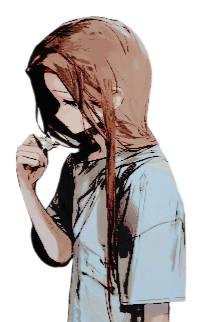
It was on a grey autumn afternoon that Loveday's life took its most unexpected turn, and the event would forever change the way she understood her place in the world. She had been walking behind the orphanage, collecting fallen leaves for a project she was working on, when she heard the unmistakable sounds of a struggle coming from the shadowed alcove near the old well. Her heart began to beat faster as she crept closer, and what she saw made her blood run cold. A group of older boys had cornered her friend, a shy, gentle girl named Iris who had never hurt anyone in her life, and they were taunting her mercilessly, their cruel laughter echoing off the stone walls. Iris was crying, her small body pressed against the wall. Her hands were raised in a futile attempt to protect herself. Loveday's mind suddenly felt clouded with an emotion she did not fully understand — a mixture of fury and helplessness that seemed to burn in her chest like a live coal.Without thinking, Loveday stepped forward, her voice slow but steady as she told the boys to stop. They turned to her with sneers on their faces, their eyes lighting up with a new and more entertaining target. They had heard the whispers, of course, the way Mother Superior praised Loveday's intelligence, the way she was always singled out for special attention, the way the other nuns seemed to look at her with something approaching adoration. It had bred resentment in their young hearts, and they saw this as the perfect opportunity to put the strange, silent girl in her place. They advanced on her, shoving Iris aside, and Loveday braced herself for what was to come. The first blow caught her across the face, and she stumbled backward, the taste of blood flooding her mouth. She tried to fight back, but her limbs seemed to belong to someone else, slow and uncoordinated, and she quickly realized that physical strength was not her ally. She sank to her knees, curling into herself, trying to protect her vulnerable places as the blows continued to fall, and she thought, this is it, this is how it ends, beaten in a corner like a helpless thing.
But then something extraordinary happened. A single butterfly appeared as if from nowhere, fluttering between her and her tormentors. Then another came, and another, until the air was thick with the sound of beating wings, the air filled with a kaleidoscope of color and motion. The boys looked up, momentarily distracted, and that was when the chaos began. One of them slipped on a patch of wet moss, his feet flying out from under him as he crashed to the ground. Another stumbled backward into the well, catching himself just in time to avoid falling in, but not before striking his head against the stone edge. The third, perhaps the cruelest of them all, swatted wildly at the butterflies, only to trip over his own feet and land face-first in a patch of stinging nettles. Loveday watched from her place on the ground, her eyes wide with wonder, as the butterflies continued their dance, their wings creating tiny currents of air that seemed to spiral outward and upward, the chaos spreading like ripples in a pond. It was as if the butterfly's wings had set in motion a chain of events that none of them could have predicted, a cascade of misfortune that had nothing to do with her and everything to do with the strange, subtle power of their movement. The boys scrambled to their feet, their faces pale with confusion and fear, and they fled without another word, leaving Loveday alone with the fluttering hosts that had come to her defense.

CHAPTER 5
The Lesson of the Equinox.
Mother Superior's office was always cold, and Loveday stood before the formidable woman with her hands clasped in front of her, her bruises already beginning to darken on her pale skin. The boys stood beside her, their faces still marked by the chaos they had experienced, their eyes darting nervously toward the door as if they expected more butterflies to appear at any moment. Mother Superior looked at each of them in turn, her expression unreadable, her fingers steepled on the desk before her. "Explain," she said, her voice carrying the weight of authority that had kept generations of orphans in line, "what exactly happened behind the building this afternoon." The boys were quick to speak, their words tumbling over each other in their eagerness to shift the blame. They claimed that Loveday had attacked them, that she had used some sort of trick, that she had summoned strange insects to torment them. Loveday listened to their lies with a heavy heart, and when it was her turn to speak, she did so slowly, carefully, telling the truth as she had always been taught to do.She explained how she had found Iris being bullied, how she had tried to intervene, how the boys had turned on her and beaten her. She did not try to explain the butterflies, because she could not have explained them even if she had wanted to. She simply stated the facts as they had occurred. When she was finished, she looked at Mother Superior with the same patient, knowing expression that had always been her way. Mother Superior listened to both sides of the story, her face growing increasingly somber, and when she finally spoke, her words were measured and deliberate. "Loveday Merian Butterfly," she said, "and the rest of you, you will all be punished equally. You, boys, for your cruelty, and you, Loveday, for your part in the chaos that followed." Loveday opened her mouth to protest, but Mother Superior held up a hand, silencing her. "In this world," she continued, "there are consequences for every action, whether intentional or not. You should know a butterfly flapping its wings here can cause a hurricane on the other side of the world. You would do well to remember that."Loveday left Mother Superior's office with a heavy heart, her bruises aching and her soul confused. She had done what she thought was right, and yet she had been punished alongside her tormentors. As she made her way to the garden, seeking the solace she always found among the insects, she saw a butterfly resting on a rose bush, its wings opening and closing slowly in the fading light. She approached it carefully, and as she drew near, it seemed to look at her with its compound eyes, acknowledging her presence. In that moment, Loveday understood something profound. The butterflies were not just insects to her — they were her truest friends. She reached out her finger, and the butterfly alighted upon it, and she felt a connection that transcended the boundaries of species and understanding. She would never truly be alone, she realized, as long as she had the butterflies. They would always be there, fighting for her, even when the fight cost them both dearly.

CHAPTER 6
El arte de la adolescencia.
The years passed, and Loveday grew from a strange, silent child into a young woman of remarkable intelligence and singular determination. The world had changed around her, but Loveday remained constant in her pursuit of knowledge and understanding. She left St. Brigid's for the university, her heart full of the dreams that had sustained her through all the lonely years of her childhood. She chose to study entomology, and she specialized in lepidopterology, the study of butterflies and moths.College life was not easy for Loveday, but she persevered and poured herself into her studies with the same determination she had shown as a child. Her grades were exceptional, her papers praised for their insight and originality, and she quickly earned a reputation as one of the most promising young scientists in her field. But it was her art that truly set her apart. Loveday had always drawn; her sketches capturing the delicate beauty of the insects she loved with a precision that bordered on the photographic. Her paintings, however, were something else entirely. She created a series of works depicting the metamorphosis of butterflies, each canvas capturing a different stage of the transformation with a vividness that seemed almost impossible. The cocoons seemed to pulse with life, the emerging butterflies seemed to flutter on the canvas, and the final images, of butterflies in full flight, seemed to capture something essential about the nature of change itself. Her most famous work, a painting of a butterfly emerging from its cocoon against a backdrop of swirling chaos, became something of a sensation, and Loveday found herself celebrated in ways she had never anticipated.

CHAPTER 7
Un forte sbattere d’ali.
Despite her success, despite the acclaim and the recognition that had finally come her way, Loveday never forgot the power that had revealed itself to her in the orphanage's shadowed alcove. She had spent years trying to understand it, reading every scientific text she could find on butterfly flight patterns and chaos theory, searching for an explanation that would make sense of what she had experienced. She had never been able to replicate the event, never been able to summon the butterflies at will or direct their movement with her thoughts. She had tried, in the early years, to master what she had come to believe was a superpower. But her efforts had always ended in failure, and what was worse, they had sometimes ended in unintended consequences: a broken window, a strange gust of wind, a sudden change in the weather that could not be explained by any meteorological model.She began to realize that the power was not something to be wielded lightly. Every time she tried to use it, even in the smallest way, she felt the weight of what she was doing, the potential for chaos that came with every flap of a butterfly's wings. She remembered Mother Superior's words, the lesson about hurricanes and distant shores, and she began to believe that the power was not a gift but a burden, a responsibility that she had been given but could not fully understand. She stopped trying to use it, and she lived her life as if she were an ordinary woman, going about the ordinary business of living. But the power never truly left her. It lingered in the shadows of her consciousness. She knew, with a certainty that went beyond faith or understanding, that she could use it if she truly needed to. But she also knew that doing so would set in motion a chain of events that no one could predict, that the chaos she unleashed would ripple outward in ways that could never be undone.She was Loveday Merian Butterfly, named for the day she was loved and the butterfly she would become, but she knew that becoming something was only half the story — the other half was learning to live with what you had become.